


Best Oils for Hair Ends
Finding the right oil for your hair ends can transform dry, frayed tips into soft, smooth strands that actually look healthy. This guide is for anyone struggling with dry, split, or frizzy hair ends, regardless of hair type or texture. Healthy ends are essential for overall hair appearance and length retention. Whether you’re dealing with split ends from heat styling, frizzy hair from humidity, or just general dryness that makes your ends gfeel like straw, the right hair oils can make a noticeable difference. This guide breaks down exactly which oils work best for different hair types, how to apply them without looking greasy, and what you can realistically expect from consistent use.
Key Takeaways
-
The best oils for hair ends in 2026 include argan oil, jojoba oil, coconut oil, avocado oil, olive oil, castor oil, and almond oil, with emerging options like chebe oil gaining popularity for strength and reduced breakage.
-
Fine hair or easily weighed-down strands do best with lightweight options like argan, jojoba, and almond oils, while thick, coarse, or damaged hair benefits from richer choices like coconut, castor, and olive oil.
-
Natural oils cannot permanently repair split ends or fuse frayed fibers back together—they temporarily smooth and disguise damage while slowing further splitting when used consistently.
-
Application technique matters as much as oil selection: use just a few drops (1-4 depending on length), focus on mid-lengths to ends only, and apply mostly to damp hair to avoid greasy residue.
-
Most hair oils work best as part of a complete routine that includes regular trims, heat protectants, and gentle handling of fragile ends.
Why Hair Ends Need Special Care
The ends of your hair are the oldest and most fragile part of the strand, making them more susceptible to damage. Without proper care, hair ends can become weak and brittle, causing split ends and overall hair thinning. Regular moisturizing and gentle handling can significantly improve the condition of hair ends.
Hair ends are the oldest part of every strand. On shoulder-length hair, those tips have been growing for roughly 2-3 years, weathering everything from daily brushing to seasonal temperature swings. This makes them the most fragile section of your hair.
Common damage sources that specifically affect ends include:
-
Heat styling from flat irons, curling wands, and blow-dryers
-
Mechanical stress from tight ponytails, rough brushing, and towel-rubbing
-
Environmental factors like sun exposure, wind, low humidity, and pollution
-
Chemical services such as bleaching, highlighting, balayage, relaxers, and keratin treatments
These environmental stressors strip the hair cuticle over time, leaving ends porous and dry. When cuticles become worn and lifted, the result is split ends, mid-shaft breakage, frizz, and tangling that can make hair appear like it’s not growing even though new growth continues at the scalp.
The critical issue: sebum from your scalp rarely travels all the way down long hair strands. This means ends receive fewer natural oils, making targeted nourishment with hair products essential.
Benefits of Using Hair Oils on Your Ends
Hair oils act as both a cosmetic smoother and a protective layer for vulnerable ends. Here’s what consistent use actually delivers:
Moisture retention
Oils help seal in water from your wash and conditioner, keeping ends softer for longer. This reduces that crunchy, straw-like texture that develops when ends lose hydration, especially when paired with nourishing cleansers like rice shampoo and conditioner formulas.
Cuticle smoothing
A thin oil layer creates slip, flattens lifted cuticle scales, and instantly boosts shine. This is why many hair oils enhance shine and add a polished look to the last few inches of hair strands.
Mechanical protection
Lubricated ends glide past each other and through brushes more easily. This means reduced breakage, less friction, and fewer knots—especially valuable for curly hair or long hair prone to tangling.
Environmental defense
Oils can buffer against low humidity, wind, and friction from scarves and collars. Some formulations offer limited UV rays protection when layered with dedicated heat protectants.
Styling longevity
Feeding ends with oil helps curls stay defined, blowouts look polished for days, and stretched styles resist frizz at the tips.
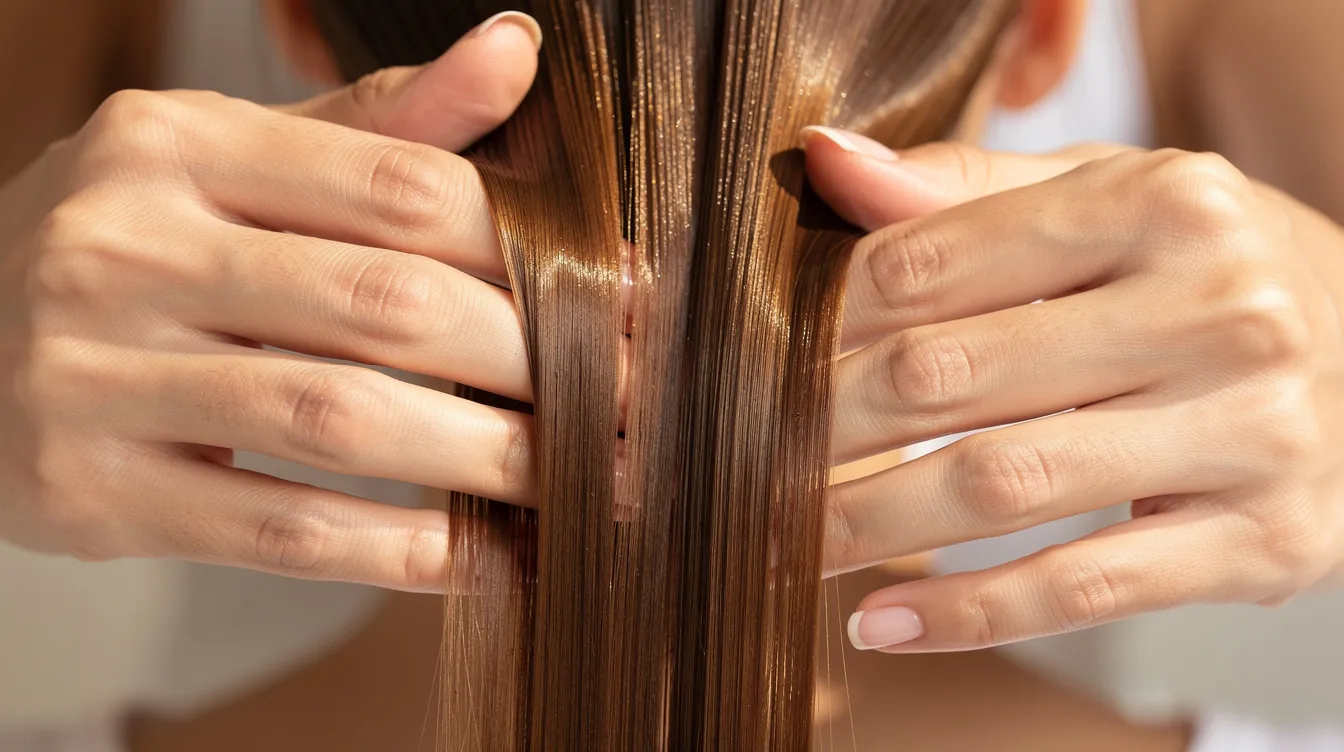
Best Hair Oils for Ends (By Oil Type)
This section breaks down the most effective individual oils for hair ends, with guidance on ideal hair types and key benefits for each, similar to what you’d find in a curated range of 100% pure carrier oils.
Argan Oil

Argan oil is known for its hydrating properties and rich vitamin E content, which strengthens and repairs hair while adding shine.
A lightweight, fast-absorbing oil rich in vitamin E, antioxidants, and fatty acids. Argan oil suits all hair types but works particularly well for fine to medium hair that needs frizz control and shine without heaviness. It’s described as the “go-to solution for hard-to-tame manes” and helps smooth strands while fighting flyaways.
Jojoba Oil

Jojoba oil effectively seals moisture in hair and mimics natural scalp oils for hydration without clogging. It is a lightweight option that moisturizes without leaving a greasy residue.
Structurally very similar to human sebum, making it excellent for balancing scalp conditions without leaving greasy residue. Jojoba oil absorbs well and provides detangling benefits, particularly beneficial for those with irritated or flaky scalps alongside dry ends.
Coconut Oil

Coconut oil deeply penetrates the hair shaft, providing intense moisture and reducing protein loss, which helps prevent split ends.
Known for its strong affinity for hair proteins, coconut oil can penetrate the hair shaft and prevent protein loss, making hair grow stronger. Ideal for thick, coarse, or very dry ends, especially as a pre-wash or deep conditioning treatment. However, it can feel heavy or stiff on fine hair or low-porosity strands.
Avocado Oil

Avocado oil is filled with vitamins and nourishes and strengthens hair, preventing excessive dryness.
A penetrative, vitamin-rich oil suitable for medium to thick hair. Particularly beneficial for chemically treated or sun-exposed ends needing softness and elasticity. Oils penetrate well with avocado, delivering deep hydration where damage is most severe.
Olive Oil

Olive oil is a natural emollient that deeply conditions hair, sealing moisture into dry, damaged ends.
Richer than most options and primarily coats the surface rather than deeply penetrating. Best used sparingly on very dry, coarse, or curly ends, or mixed with lighter oils. Using it neat on fine hair often leads to weigh hair down and flatness.
Castor Oil

Castor oil is known for its thick consistency and high ricinoleic acid content, which is excellent for sealing split ends and preventing further damage.
Thick and occlusive, excellent for sealing oils on extremely dry, breaking ends or protective styles. Jamaican black castor oil is particularly popular, being rich in ricinoleic acid with antimicrobial properties, and is widely featured in Well's Oil natural care lineup. Should be diluted with lighter oils to avoid stickiness.
Almond Oil

Almond oil is lightweight and easily absorbed, making it good for hydration without heavy residue.
Light-to-medium with a silky slip that suits fine to medium hair. Contains vitamin E and restores balance to tired, itchy scalps while smoothing ends. One reviewer noted it “feels unbelievably relaxing; not only is it light, but it also smells gentle and works well with virtually any hair type.” Avoid if you have a nut allergy.
Grapeseed and Manketti Oils

Grapeseed oil is a lightweight oil that adds shine and provides a protective layer, while manketti oil is rich in nutrients, protein, and fatty acids that strengthen damaged strands.
Modern lightweight options that add shine and a protective layer. Manketti oil is rich in nutrients, protein, and fatty acids that strengthen damaged strands. Grape seed varieties work well on heat-styled or color-treated ends without feeling heavy.
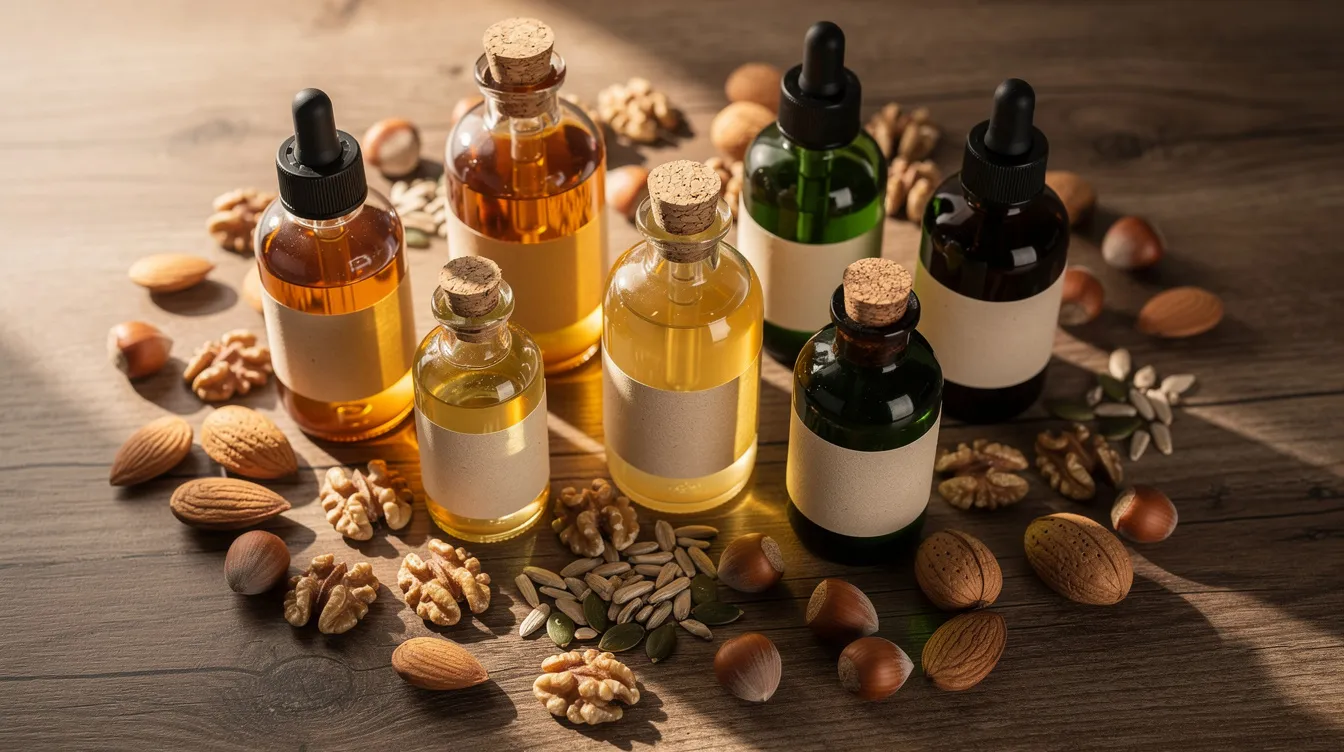
Best Oils for Dry, Rough, or Frizzy Ends
Chronically dry, rough, or frizzy hair ends need a mix of penetrating oils to soften hair from within and sealing oils to lock that softness in.
Top penetrating choices: Coconut and avocado oils work best for very dry, brittle ends because they improve softness over time. Use them as overnight treatment masks 1-2 times per week for best results.
Powerful sealants: Olive and castor oils excel at trapping moisture on coarse hair or curly hair when applied in tiny amounts on top of water-based leave-ins. This reduces frizz halos and keeps ends feeling smooth.
For high-porosity or highlighted hair: Layer a leave-in conditioner first, then add a few drops of argan or almond oil on the last 5-7 cm. This combination tackles both fuzz and dryness effectively.
In humid climates, focus oils just on the bottom section and pair with a silicone-based serum for better frizz control without overloading the entire length.
Best Lightweight Oils for Fine or Oily-Prone Hair Ends
If you avoid oils because you’re worried about looking greasy or flat, this section is for you.
The best hair oils for fine hair that gets weighed down easily:
|
Oil Type |
Absorption Speed |
Best For |
|---|---|---|
|
Argan |
Fast |
Frizz control, shine |
|
Jojoba |
Fast |
Balancing, non-greasy finish |
|
Grapeseed |
Very fast |
Lightweight texture, heat protection |
|
Almond |
Medium |
Silky slip, gentle conditioning |
Application for fine hair:
-
Use only 1-3 drops maximum
-
Warm between palms first
-
Press just into the very tips (last 2-3 cm)
-
Avoid applying oil to mid-lengths unless extremely dry
-
Apply primarily on freshly washed, towel-dried hair
-
Add a tiny touch on dry hair only if ends look frazzled between washes
Best Oils for Curly, Coily, or Natural Hair Ends
If you have tight curls or coils, using products formulated specifically for coily hair types and concerns can enhance the benefits of your oil routine.
Curls and coils naturally have drier ends because sebum has to travel around bends and often doesn’t reach the tips at all.
Richer oil choices work best here:
-
Coconut oil
-
Castor oil
-
Olive oil
-
Avocado oil
-
Mongongo (manketti oil)
These help reduce single-strand knots and keep twist-outs and wash-and-gos from frizzing at the ends. The LOC (liquid-oil-cream) or LCO approach works well: water or leave-in first, cream or butter second, then a few drops of your favorite hair oil to seal.
Concentrate oil on ends before protective styles (braids, twists, or locs, buns) to reduce breakage when taking styles down and keep ends supple for weeks.
Best Oil Choices for Split Ends and Breakage
No oil can permanently repair split ends. However, the right oils can temporarily bind fraying fibers together, improve appearance, and slow additional splitting.
For cosmetic improvement: Argan and jojoba oils make split ends look smoother and shinier because they coat the cuticle evenly. You’ll notice immediate visual improvement even though the damage remains underneath.
For sealing frayed ends: Castor and almond oils work as helpful sealants on very damaged tips when used sparingly. They essentially “glue down” the outer layer and protect fragile ends from further stress.
Application strategy:
-
Apply 1-2 drops to damp hair after every wash
-
Focus on mid-lengths to ends only
-
Add a tiny extra drop to dry ends before heat styling as a protective buffer
If you see extensive white dots and traveled splits, the most effective treatment is a trim of at least 0.5-2 cm. Then use oils to maintain your new, healthy hemline and prevent future damage.
How to Apply Hair Oils to Your Ends
Getting quantity and placement right is essential to reap benefits without ending up with limp or greasy hair.
Step 1 – Choose your timing
-
Apply hair oil to towel-dried, slightly damp hair after conditioner or a leave-in to lock in hydration.
-
Applying to wet or dry hair depends on your goal: damp hair maximizes moisture sealing, while dry hair application works best for quick shine and frizz control between washes.
Step 2 – Use the right amount
|
Hair Length |
Recommended Drops |
|---|---|
|
Short (chin or above) |
1-2 drops |
|
Medium (shoulder) |
2-3 drops |
|
Long (below shoulders) |
3-4 drops |
|
Very thick or coarse hair |
Add 1-2 extra drops |
|
Always start with less and build only if needed. Avoid applying hair oil near the roots if you have oily hair to prevent greasiness. |
|
Step 3 – Warm and distribute
-
Warm the oil between your palms before applying it to improve absorption.
-
Lightly smooth or “press and scrunch” into the last 5-10 cm of hair only.
-
Avoid applying oil directly to roots.
Step 4 – Focus placement
-
Stay away from the scalp unless doing a specific scalp treatment.
-
Focusing on mid-lengths and ends prevents flatness and buildup that makes hair health suffer.
Most hair types benefit from oiling 2-3 times per week. Very dry ends can handle light daily application, but adjust frequency if hair starts to feel coated or heavy.
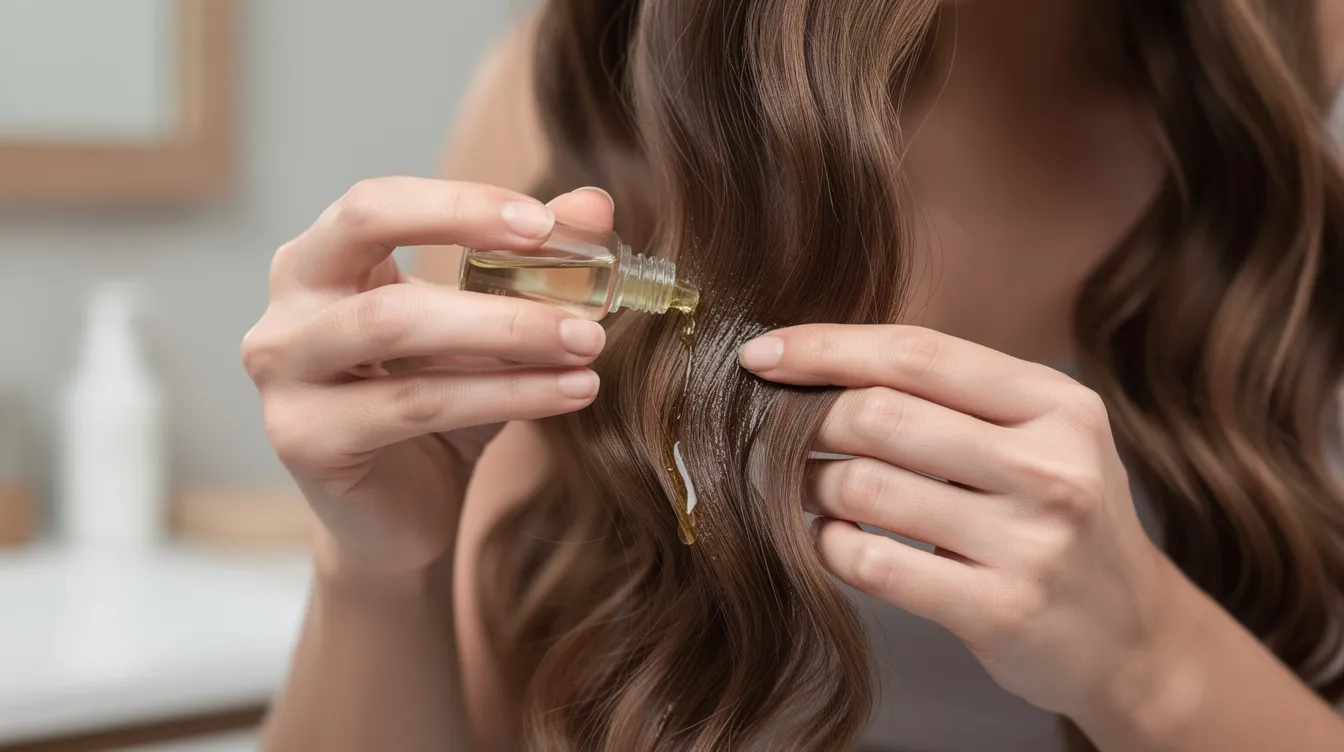
Overnight and Pre-Wash Oil Treatments for Ends
Deeper, occasional treatments can rescue extremely dry or post-bleach ends better than daily tiny applications alone. Applying oil before bed can help minimize friction and dryness overnight.
Overnight treatment method:
-
Apply a small amount of a richer oil (coconut, avocado, or a blend) to dry ends
-
Braid or bun loosely to prevent transfer
-
Protect your pillow with a towel or silk bonnet
-
Shampoo and condition thoroughly the next morning
10-30 minute pre-wash oiling:
-
Apply oil to mid-lengths and ends before showering
-
Leave on while doing other tasks
-
Cleanse with gentle shampoo
This pre-wash approach can reduce protein loss during washing, particularly beneficial for blonde hair or heavily processed strands, especially when paired with targeted hair growth and strengthening oils.
Limit heavy overnight oiling to 1-2 times per week to avoid buildup. Use a thorough but non-stripping wash afterward—drugstore hair oil formulas typically rinse out easily with regular shampoo.
Extra Tips for Keeping Hair Ends Strong and Smooth
Oils work best as part of a bigger routine that prevents and manages damage at the ends. Here are the essential supporting practices:
Regular trims
Every 6-10 weeks depending on hair growth and damage level. This removes frayed ends and keeps your hemline full and tidy.
Heat protection
Always apply dedicated heat protectants before blow-drying, straightening, or curling. Some formulas like Kérastase oil offer heat protection up to 230°C, but oils alone aren’t reliable shields above moderate temperatures.
Gentle detangling
Use wide-tooth combs, fingers, or soft detangling brushes. Start from ends and work upward to avoid snapping fragile tips.
Fabric choices
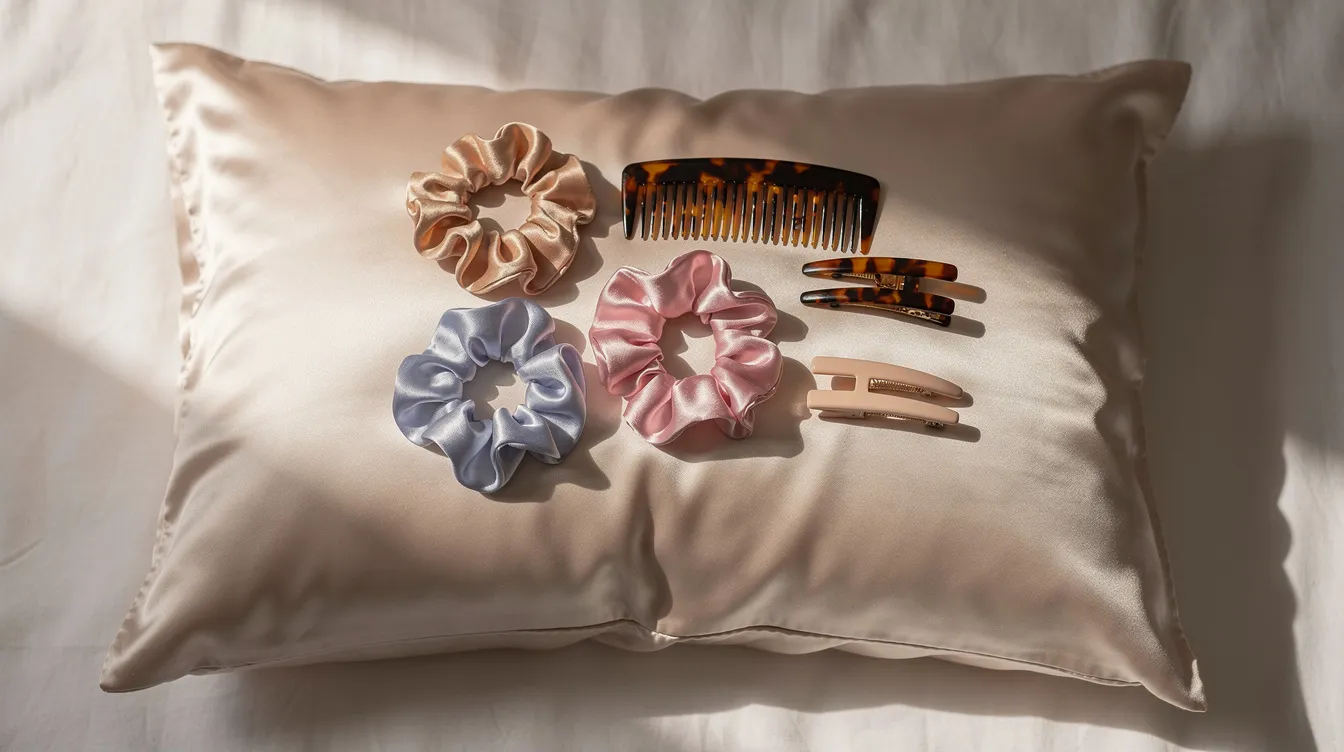
Silk or satin pillowcases and scrunchies reduce friction and roughness compared to cotton or tight elastics.
Washing habits
Use lukewarm (not very hot) water. Minimize harsh clarifying shampoos on lengths. Gently squeeze hair with a microfiber towel or cotton T-shirt instead of vigorous rubbing—this alone can significantly reduce breakage.
Consider hair porosity
Understanding your hair porosity helps you choose oils that will actually absorb rather than sit on top. Low porosity hair needs lightweight formula options while high porosity strands benefit from heavier sealing oils, like the natural blends in Well's Oil self-care collection.
FAQs
How often should I oil my hair ends?
Two to three times per week works well for most people as a starting point. Very dry or curly hair can handle daily light applications, while fine hair or quickly greasy strands may only need weekly treatment. Monitor how your hair feels—if ends feel coated or lose volume, reduce frequency. If they’re still rough by the next day, increase slightly. The goal is healthy hair that feels softer without looking weighed down.
Can I mix different oils together for my ends?
Blending oils is safe and often beneficial. Try combining a penetrating oil like coconut or avocado with a lightweight finisher like argan or jojoba for both deep hydration and shine. Jojoba can be mixed with rosemary or peppermint oil to create a DIY scalp serum. Keep blends simple (2-3 oils) and test on a small section first to ensure the mixture doesn’t leave hair feeling heavy or sticky.
Will using oil on my ends make my hair look greasy?
Greasiness typically comes from using too much product, applying directly to roots, or choosing an oil too heavy for your hair type. If your roots get oily quickly, focusing on scalp-friendly habits that help prevent greasy hair is just as important as choosing the right oil for your ends. Start with 1-2 drops, focus strictly on the last 2-5 cm, and build gradually only if ends still look dry. Wavy hair and gray hair often absorb oils quickly without residue issues, while fine straight hair needs extra caution with quantities.
Are natural oils better than silicone-based serums for hair ends?
Natural oils offer nourishing ingredients that soften and condition, while silicone-based serums excel at instantly smoothing the cuticle and providing heat damage protection. Many people benefit from using both: a light plant oil after washing for conditioning, and a silicone serum as a finishing touch before or after heat styling. In humid climates, silicone serums often provide superior frizz control.
Can hair oils actually repair split ends permanently?
No topical product can permanently fuse a split end back together—only trimming removes damage fully. Oils temporarily smooth and mask splits, reducing snagging and making them less noticeable. They also help prevent new splits by cushioning and protecting ends from mechanical stress and environmental stressors. Think of oils as maintenance tools that extend time between trims rather than miracle repair products. Clinical studies show multi-oil formulations can increase hair smoothness by up to 278% and hydration by 87%, but these benefits require consistent application to maintain.


