


Oiling Thin Hair: How to Nourish Without Weighing It Down
If you have thin hair, you’ve probably heard conflicting advice about hair oil. Some sources swear by it for shine and strength. Others warn it will leave your strands limp and greasy. The truth lies in technique. Oiling thin hair can deliver real benefits—smoother ends, reduced breakage, and a healthier scalp—but only when you use the right oil in the right amount, applied to the right places. It's important to choose lightweight oils and avoid heavy oils like olive, castor, and thick coconut oil, as these can weigh down thin hair and make it look flat.
This guide is for anyone with fine or thin hair who wants to use hair oils for nourishment, shine, and protection without sacrificing volume.
This guide breaks down everything you need to know about incorporating natural oils into your hair care routine without sacrificing volume or freshness.
Key Takeaways
-
Thin hair needs lightweight, fast-absorbing oils to avoid flat, greasy roots
-
Pre-shampoo oiling and pea-sized amounts applied to mid-lengths and ends are safest for preserving volume
-
The best hair oils for fine hair include grapeseed oil, jojoba oil, and lightweight silicone blends—heavy options like pure castor oil should be avoided or heavily diluted. Lightweight oils like argan, jojoba, and grapeseed are especially recommended for thin hair to provide nourishment without heaviness. Argan oil is valued for its antioxidant properties and ability to protect against protein loss, while grapeseed oil is particularly beneficial for fine hair as it eases frizz and treats split ends without making hair greasy.
-
Most people with fine or thin hair benefit from oiling 1–2 times per week, adjusted based on scalp oiliness and heat styling habits
-
Correct technique matters more than the specific oil you choose—small amounts, strategic placement, and thorough removal are essential
What Makes Thin Hair Different (and Why Oiling Is Tricky)
“Thin hair” can mean fewer strands on your head, finer strand diameter, or both. These characteristics directly affect how hair oil works on your scalp and lengths, making the wrong approach particularly visible.
Strand diameter matters.
Fine hair strands typically measure less than 0.05 mm in diameter, compared to medium (0.05–0.07 mm) or coarse hair (over 0.07 mm). This smaller surface area means fine hair gets weighed down more easily by heavy formulas.
Density creates visibility challenges.
Sparse hair—fewer than 100,000 follicles compared to 120,000–150,000 for denser hair types—means gaps between strands make any oil residue or greasiness more obvious on the scalp.
The dual condition problem.
Thin hair often develops oily roots from overactive sebaceous glands while ends stay dry and porous. This creates a balancing act where oils must hydrate without coating. Using spray applicators for oil application can help control the amount used and prevent over-application, which is especially important for thin hair, especially if you’re also trying to prevent greasy hair and excess scalp oiliness.
Protection needs without weight.
Fine hair experiences 20–30% higher breakage rates and needs protection from heat damage and friction, but with products that absorb quickly and feel weightless.
Simple strand test: Isolate one hair between your thumb and forefinger. If it feels barely perceptible or slides smoothly without resistance, you have fine hair that requires lightweight applications.
Benefits of Oiling When You Have Thin Hair
Oiling isn’t reserved for thick hair or thicker hair types. Done correctly, it can make thin hair look healthier and fuller over time by addressing the specific vulnerabilities of fine strands.
-
Reduces friction and breakage.
Lightweight oils decrease inter-strand friction by 40–60%, preventing tangles that lead to hair breakage during brushing or pillow friction at night. This helps reduce hair breakage significantly over time. -
Seals the hair cuticle.
Fatty acids penetrate the hair shaft and seal moisture into the cuticle, reducing moisture loss by up to 50% in damaged hair. This makes ends look smoother and less frizzy, transforming “stringy” thin hair into strands with natural shine. -
Supports scalp health.
Gentle massage during application increases blood flow to hair follicles by 20–30%, helping with dryness or mild flaking without heavy buildup that can clog pores. -
Adds slip and movement.
The right lightweight oil creates soft shine so thin hair moves naturally instead of looking limp or stiff. -
Provides heat protection.
Using oil before blow drying or heat styling creates a protective barrier. Fine hair can lose up to 70% more protein under high temperatures without protection, so this barrier helps prevent heat damage and protein loss.

Best Types of Oils and Textures for Thin Hair
Not all oils work equally well on thin hair. Fine strands do best with fast-absorbing, lighter formulas that won’t coat the hair shaft with heavy residue, so choosing from natural hair care oils and treatments or other 100% pure carrier oils that are specifically lightweight is key.
Lightweight Plant Oils for Fine Hair
|
Oil Type |
Absorption Time |
Key Benefits |
|---|---|---|
|
Grapeseed oil |
Under 5 minutes |
High in linoleic acid (65–75%), vitamin E, lightweight; a lighter option that helps ease frizz and treats split ends without making hair greasy |
|
Jojoba oil |
2–3 minutes |
Mimics scalp sebum, regulates oil production, penetrates 80% deeper than heavier oils |
|
Sweet almond oil |
5–10 minutes |
Rich in oleic acid, emollient—dilute for fine hair; treats dullness and dryness without weighing hair down and offers protection against UV radiation; a 100% pure natural carrier sweet almond oil works well when used lightly on the ends |
|
Sunflower seed oil |
5–10 minutes |
Light polyunsaturated essential fatty acids, minimal residue |
Dry Oils and Light Blends
Dry oils and lighter silicone-containing blends evaporate partially on contact, leaving shine through light refraction without weight. These work well on mid-lengths and ends where thin hair tends to fray most.
What to Avoid
Heavy options like pure castor oil (10–20 times more viscous than lighter alternatives) or thick butters are usually too much for thin hair. If you want to use castor oil, dilute it at a 1:3 ratio with a lighter carrier and apply only to tips. Olive oil and avocado oil fall into this heavier category as well.
Coconut oil deserves special mention: its lauric acid content allows it to penetrate the hair shaft, but its richness means just a drop works best for fine hair, focused on ends only, particularly if you’re already using natural oils like Batana and other lightweight blends elsewhere in your routine.
Always patch test. Apply any new oil to your inner arm for 24–48 hours before using it on your scalp to check for reactions.
How to Oil Thin Hair Without Losing Volume
Technique matters more than the exact oil you choose. Where you apply hair oil, how much you use, and when you apply it determines whether thin hair stays bouncy or goes flat.
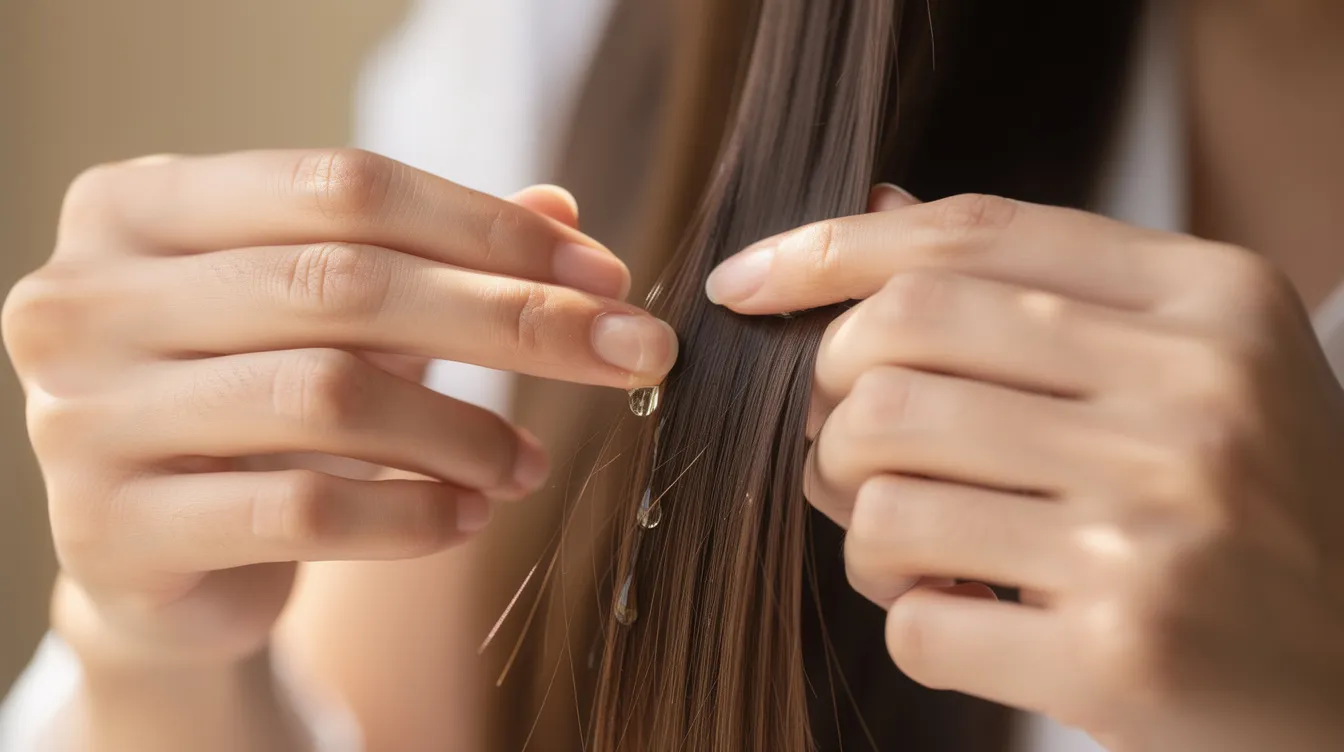
Mid-lengths refer to the section of hair from about ear level down to just above the ends. Ends are the last 2–3 inches of your hair, while roots are the first 2–3 cm at the scalp.
Use minimal amounts. Stick to pea-sized (0.2–0.25 ml) for short hair up to dime-sized (0.5 ml) for longer lengths. Too much oil—even the lightest formula—will drop lift by 40% within hours.
Emulsify before applying. Rub the oil between your palms for 20–30 seconds to break droplets into smaller particles for even distribution.
Focus on mid-lengths and ends. Direct 80% of the product from ear level down, avoiding the first 2–3 cm at the scalp unless you’re doing a specific scalp treatment.
Pre-shampoo oiling is volume-safe. Apply hair oil to dry hair 30–60 minutes before washing. This allows 60–80% absorption before shampoo removes residue, protecting the hair shaft without leaving weight behind.
Post-wash routine. On damp hair after washing, use a few drops of oil from ear level down, combed through with a wide-tooth comb. Lightly scrunch into ends for natural movement instead of slicking hair flat.
Warm oil penetrates better. Body-temperature oil (around 37°C) penetrates 2–3 times deeper than cold oil due to reduced viscosity.
Step-by-Step Oiling Routines for Thin Hair
Choose the routine that matches your goals—protection, shine, or scalp care.
Pre-Shampoo Treatment Routine
-
Section dry hair into 4 quadrants
-
Dispense pea-sized oil and emulsify between palms
-
Massage into lengths and ends for 2–3 minutes
-
Optional: 1-minute gentle scalp massage with fingertip circles
-
Cover with a cap and leave on 30–45 minutes
-
Apply shampoo to dry roots first, then lather with water
Night-Before-Wash Routine
-
Apply a few drops of lightweight oil to ends only
-
Loosely braid or twist hair (no tight tension)
-
Use a silk or satin pillowcase to reduce friction by 60%
-
Wash in the morning for residue-free volume
Everyday Leave-In Routine
-
After styling, warm just a drop between palms
-
Apply to flyaways and dry ends only
-
Avoid roots completely to maintain style bounce
-
Works well with wavy hair or straight hair alike
Weekly Scalp Care Routine
-
Apply a very thin layer of lightweight oil to scalp
-
Massage with fingertip circles for 2–3 minutes
-
Leave on 20–30 minutes
-
Double shampoo to remove excess oil completely
How Often Should You Oil Thin Hair?
Frequency depends on scalp oiliness, styling tool use, and climate—not just hair thickness, and it should fit into an overall natural beauty and haircare routine that supports scalp balance and hydration.
-
Starting point: Most people with thin hair benefit from 1–2 oiling sessions per week
-
Oily scalps: Limit oiling to pre-shampoo treatments on mid-lengths and ends only, spacing sessions 10–14 days apart
-
Dry or color-treated hair: Oil 2–3 times weekly, focusing on damaged hair at the ends and rinsing thoroughly
-
Regular heat styling: Add one extra session weekly to provide heat protection, and pair your routine with a gentle rice-based shampoo and conditioner system that won’t leave heavy residue
-
Seasonal adjustments: Colder months may call for more focus on dry ends, while humid summers benefit from less frequent, lighter applications
Track changes over 3–4 weeks. If hair starts feeling coated, limp, or difficult to clean, reduce frequency or amount.
Common Mistakes to Avoid When Oiling Thin Hair

Many “oiling disasters” come from avoidable habits, not from the oil itself.
-
Using too much product: Even a coin-sized amount can cause 50% volume loss. Solution: Stick to pea-sized amounts.
-
Saturating the scalp: Makes hair greasy within 12 hours, amplifies visibility in sparse areas. Solution: Focus on mid-lengths and ends.
-
Skipping proper shampooing: Causes buildup, itchiness, and limp roots. Solution: Shampoo roots thoroughly, double wash if needed.
-
Applying to roots on styling days: Collapses volume, exposes more scalp. Solution: Save oiling for wash day or night before.
-
Mixing too many products: Overwhelms thin cuticles. Solution: Test one formula at a time for 2 weeks, paying close attention to how stylers like braiding gels and their ingredients interact with your oils.
How to Wash Out Oil from Thin Hair Without Over-Drying
Correctly removing oil is just as important as applying it. Fine hair shows buildup quickly, making thorough but gentle removal essential.
-
Shampoo dry roots first. On heavy oil days, apply shampoo to dry or barely damp hair before adding water. This emulsifies 70% more oil than shampooing wet hair.
-
Massage with fingertips only. Use gentle circular motions to break up oil without scratching the scalp.
-
Condition mid-lengths to ends. After oil treatments, skip roots with leave in conditioner to avoid weighing hair down.
-
Clarify occasionally. Use a gentle clarifying shampoo every 2–4 weeks if you regularly use styling products and oils.
-
Use lukewarm water. Water under 38°C retains 25% more moisture than hot water, preventing extra dryness and frizz.
Signs Your Current Oiling Routine Is Not Right for You
Self-diagnose issues early so you can adjust your approach, especially if you’re also targeting hair growth concerns with specialized oils.
-
Limp, flat hair hours after washing: Too much oil, applied too often, or formulas too heavy for your hair types
-
Itchy, tight, or flaky scalp: Potential irritation or buildup—if persistent beyond 2 weeks, consult a dermatologist
-
Sticky-feeling ends or increased tangling: Oil isn’t rinsing properly or conflicts with other styling products
-
More visible scalp or hair clumps shedding: Stop using the product and discuss with a professional
-
Troubleshooting tip: Adjust one variable at a time—amount, oil type, or frequency—to identify what works
FAQ About Oiling Thin Hair
Can oiling make my thin hair fall out more?
Gentle oiling itself doesn’t usually cause hair loss. However, rough massage, tight hairstyles after oiling, or product buildup can make natural shedding (50–100 hairs daily is normal) more noticeable.
-
Massage with fingertips in small circles, avoiding pulling on strands
-
Rinse thoroughly to remove excess oil and minimize stress on fragile hair
-
Anyone noticing sudden, patchy, or heavy shedding should consult a dermatologist rather than relying on home treatments
Is it better to oil thin hair on wet or dry strands?
Dry-hair oiling before shampoo offers deeper treatment, while a tiny amount on damp hair after washing helps reduce frizz and adds shine.
-
Beginners should start with pre-shampoo oiling on dry hair to avoid styling-day limpness
-
Using too much oil on wet hair or soaking-wet hair can prevent even drying and reduce volume at the roots
Can I sleep with oil in my thin hair overnight?
Overnight oiling works for thin hair but requires light amounts, reserved mainly for nights before a planned wash day.
-
Protect pillowcases with a towel or use a silk or satin hair wrap to prevent friction and staining
-
Those with very oily scalps may prefer shorter treatments (30–60 minutes) instead of leaving oil overnight
Which is better for thin hair: scalp oiling or just oiling the ends?
Most people with thin, easily greasy hair do best focusing on mid-lengths and ends, with occasional targeted scalp care if dryness is an issue.
-
Readers with flaky, tight, or irritated scalps should talk to a professional before starting intensive scalp-oiling routines
-
Ends-only oiling is often enough to improve softness, reduce split ends appearance, and add natural shine
How long will it take to see results from oiling my thin hair?
Cosmetic improvements like smoother ends and added shine can appear after the first few uses. Hair strength improvements and reduced breakage typically take 4–8 weeks of consistent use.
-
Track changes with monthly photos in similar lighting to notice gradual differences in hair growth and health
-
Consistency over intensity: small, regular treatments work better for thin hair than rare, heavy oil applications
What about rosemary oil for thin hair?
Rosemary oil is often discussed for its potential to promote hair growth and support scalp health. For thin hair, it works best diluted in a lightweight carrier like grapeseed oil or jojoba oil. A few drops mixed into your regular oil treatment can provide benefits without weighing hair down or making it hair greasy.
Can hair oil replace heat protectant products?
While certain natural oils provide heat protection by creating a protective barrier against UV rays and styling heat, they shouldn’t fully replace a dedicated heat protectant for high-temperature styling. For blow drying or light heat styling, a light oil on ends can help, but flat irons and curling wands above 180°C require proper heat protection products.
My thin hair is also waist length hair—any special tips?
Long, thin hair benefits from focusing oil exclusively on the bottom third of lengths where damage accumulates. The right hair oil applied strategically to ends helps repair damage and adds shine without the weighing hair down effect that heavy products cause. Consider IWELL US products designed specifically for fine or thin hair if you need options that work from mid-shaft to tips without residue, especially if you also have coily or textured hair types that require targeted care.
The key to successful oiling for thin hair is precision. Small amounts of the right oil, applied to strategic areas with proper removal, deliver all the benefits—smoother ends, reduced breakage, and natural shine—without the limpness you’re trying to avoid. Start with a simple pre-shampoo treatment this week using just a drop of lightweight oil on your ends, and track how your hair responds over the next month. Your thin hair doesn’t need heavy treatments—it needs the right approach.


